

Anti-insect PVC strips vs. Traditional Pest Control: A cleaner, smarter solution
Every open doorway in a facility is an open invitation—not only to goods and workers, but also to flying insects that can compromise sanitation, regulatory compliance, and operational integrity. In food processing plants, warehouses, and manufacturing environments, a single fly can result in a failed inspection or a contaminated batch.
While traditional pest control methods rely on chemicals, noise, or electricity, a quieter, cleaner alternative is gaining popularity: Anti-Insect Yellow PVC Strip Curtains.
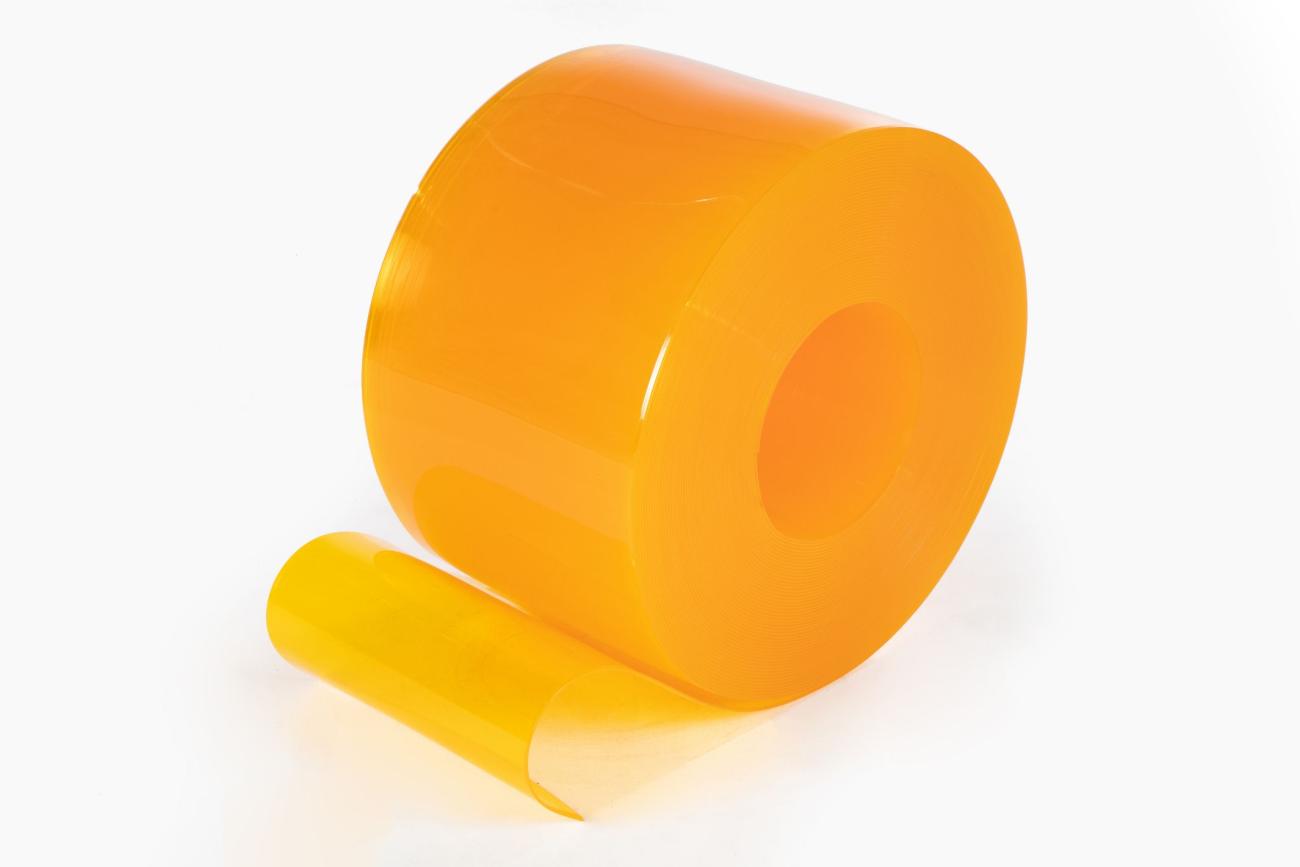
Subtly infused with citronella and precision-engineered to disrupt insect attraction patterns, these strips create an invisible barrier that works all day, every day—without sprays, traps, or electricity. Just smart design, passive protection, and peace of mind.
How Anti-Insect PVC Strips Work
Anti-Insect PVC strip curtains are more than just a visual deterrent—they’re a scientifically informed, low-maintenance solution designed to keep flying pests out without compromising your operations or safety protocols.
1. Citronella-Infused Vinyl
Each strip is infused with citronella, a natural essential oil derived from lemongrass.
Recognized for its insect-repelling properties, citronella effectively discourages flies, mosquitoes, and other flying pests—without relying on synthetic chemicals or airborne sprays. The scent is subtle to humans but disruptive to insects, making it ideal for food production, packaging, and pharmaceutical environments. Citronella is considered safe for humans by the World Health Organization and the FDA. It is used worldwide as a natural alternative for pest control.
2. Insect-Opaque Yellow Tint
The strips’ distinctive yellow pigment plays a critical role in pest prevention.
Research shows that most flying insects have limited sensitivity to yellow light wavelengths. This means they have difficulty seeing through the curtain and are less likely to detect movement, light, or potential food sources beyond it.
Without visual cues, insects have less incentive to approach the doorway or land on the curtain.
3. Continuous, Passive Protection
Unlike sprays, traps, or electrical deterrents that require monitoring, refills, or maintenance, these PVC strips work passively around the clock.
Once installed, they create a durable physical and sensory barrier that operates 24/7 without interruption.
4. Perfect for Chemical-Free Zones
Because they don’t emit volatile organic compounds (VOCs) or require active intervention, Anti-Insect PVC strips are well suited for sanitation-critical environments where traditional chemical treatments are prohibited. From cold-chain logistics and cleanrooms to open loading docks, they help facilities maintain high standards without compromise.
Whether you’re protecting food safety, maintaining sterile conditions, or safeguarding production lines, these anti-insect strips provide quiet, continuous protection. It’s uncomplicated pest control built for the real-world demands of modern industry.
The Downsides of Traditional Pest Control
Conventional pest control methods may be familiar, but they often fall short in modern industrial environments.
From chemical exposure to constant upkeep, these short-term solutions demand time, resources, and attention without providing continuous protection. In facilities where compliance and cleanliness are nonnegotiable, the need for a smarter, passive solution is clear.
Sprays and Foggers
Chemical repellents require frequent reapplication and introduce active substances into sensitive workspaces, raising concerns in food-safe and pharmaceutical environments.
Overuse can leave chemical residue on surfaces, create regulatory complications, and increase the risk of contamination. In short, they’re temporary solutions to a persistent problem.
Electric Insect Zappers
While electric insect zappers may reduce insect populations, they’re noisy, energy-intensive, and often unsuitable for sanitary environments. Insect debris can scatter, creating a contamination risk near packaging lines, preparation areas, and production equipment.
The visual and audible disruption alone may be enough to disqualify them from use in sanitation-controlled environments.
Air Curtains
Air curtains create a stream of forced air intended to block insects at entry points, but their performance can be inconsistent. They’re costly to install, require electricity to operate continuously, and are affected by environmental factors such as wind and temperature fluctuations.
If the conditions aren’t right, the protection may not be effective.
Screens and Solid Doors
Physical barriers such as mesh screens and heavy doors can keep pests out, but they’re impractical in high-traffic areas.
In facilities where forklifts, carts, and personnel require continuous access, these barriers are often left open or bypassed, undermining their purpose and reducing operational efficiency.
Anti-Insect PVC Strips vs. Traditional Pest Control
In fast-paced environments where downtime isn’t an option, choosing the right pest control method goes beyond effectiveness—it’s also about efficiency, sustainability, and safety.
The table alongside highlights the key differences between Anti-Insect Yellow PVC Strips and conventional pest control solutions.
Unlike conventional systems that consume energy, require frequent maintenance, or introduce chemicals into sensitive environments, Anti-Insect PVC strips operate quietly and continuously.
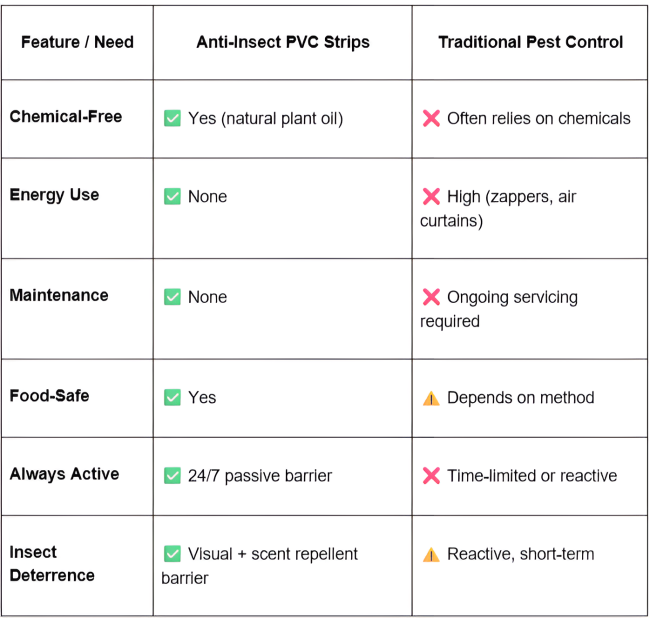
With zero operating costs, no routine maintenance, and round-the-clock effectiveness, they offer a set-it-and-forget-it solution designed for compliance-driven industries. When performance, sustainability, and simplicity matter, the choice is clear.
Where It Makes a Difference
Anti-Insect Yellow PVC Strip Curtains aren’t just an alternative to traditional pest control—they’re a purpose-built solution for the environments where protection matters most. Designed to perform without chemicals, electricity, or routine maintenance, these strips excel in high-traffic, sanitation-sensitive, and compliance-driven settings.
Ideal applications include:
- Food production and packaging areas
Maintain HACCP compliance while keeping pests out—without introducing contaminants or chemical residue.
- Food service facilities and restaurants
Protect back-of-house areas and delivery access points with a discreet, effective barrier that doesn’t disrupt workflow.
- Warehouse loading docks and logistics hubs
Prevent flying insects from entering large loading bays where constant traffic makes traditional barriers impractical.
- Waste areas near cleanrooms or processing lines
Protect clean areas from contamination by isolating adjacent waste collection and disposal zones.
- Agricultural, dairy, and livestock facilities
Provide year-round pest deterrence in facilities that require natural, chemical-free control methods.
- Retail stores, bakeries, and beverage plants
Protect customer-facing and production areas with a professional, low-profile solution that works quietly behind the scenes.
In locations where doors are opened frequently or remain partially open, Anti-Insect PVC strips form a reliable barrier that’s always active—blocking insects at the entrance before they become a problem.
From food safety to facility efficiency, these curtains provide protection where conventional methods fall short.
Smarter Protection Starts at the Door
When it comes to insect control, prevention isn’t just more effective—it’s also more sustainable.
Anti-Insect Yellow PVC Strip Curtains offer a chemical-free, energy-efficient solution that works 24/7. Infused with natural citronella and engineered with a yellow tint that limits flies’ ability to see through them, these curtains create a clean, passive barrier that keeps pests out before they become a problem.
Ready to switch to smarter pest control?